Bioconductor Cytometry Group Opens New Paths for R Learners to Contribute
Bioconductor’s cytometry community is trying to turn interest in learning R into practical contributions to the tools researchers use. A free course gives cytometry researchers a way to build coding skills; a new working group could help carry that learning into package documentation, examples and maintenance. The idea connects two needs that are often handled separately: helping researchers get started with R, and making specialist software easier to understand and sustain.
Training designed around cytometry work
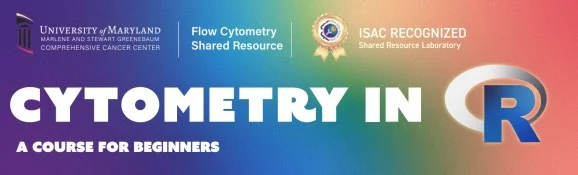
David Rach and colleagues at the Flow Cytometry Shared Resource of the University of Maryland Greenebaum Comprehensive Cancer Center launched Cytometry in R in February 2026. The weekly course is aimed at people who know cytometry but have little or no programming experience. That audience matters: researchers may understand the instruments, samples and questions in their field while still finding the programming conventions around analysis unfamiliar.
Sessions start with the working basics: setting up R, using GitHub and installing packages. From there, learners move into data handling, visualisation and cytometry analysis workflows. This order gives participants a chance to build familiarity with the tools before they encounter more involved analysis tasks. They can attend online or in person, or use recordings and openly available code and teaching materials at their own pace. GitHub Discussions gives participants a place to ask questions, which can help make the course useful beyond the scheduled sessions.
The reach suggests demand for this kind of entry point. At BioC2026, Rach reported nearly 2,000 expressions of interest from around the world, with several hundred people watching some weekly topics. Those figures indicate attention, though they don't by themselves show how many participants complete the course or go on to use R in their research. Still, a large pool of interested learners gives the community a possible base for future contributions.
Browse the course materials and schedule | Watch course recordings
Bridging the gap to package use
Introductory training can make R and Bioconductor more approachable, but it doesn't automatically prepare learners to work through every package vignette or apply a package to a research problem. Rach raised that gap at the Bioconductor Training Committee’s October 2026 meeting. The distinction is practical: knowing the basics of a language is one step; understanding how a specialist package handles a particular kind of data is another.
One way to address it is to add worked examples, reproducible case studies and step-by-step tutorials. Package authors, experienced users and instructors could help create materials that extend beyond the course’s coverage and show how packages fit real analysis needs. Examples grounded in familiar research tasks can also help readers judge which tools apply to their own questions, instead of leaving them to infer that from technical reference pages alone.
That work now has a community home. Rach, who recently joined Bioconductor’s Community Advisory Board, coordinates the Bioconductor Cytometry Working Group. Its remit includes community support for documentation and the longer-term maintenance of packages for conventional, spectral, imaging and mass cytometry. This is more significant than it looks: documentation shapes whether researchers can use a package confidently, while maintenance affects whether it remains useful as workflows and software change.
Turning learners into contributors
The group plans to reconnect with package developers, understand their priorities and identify where help would be useful. A focused documentation or writing sprint is one possibility: Cytometry in R participants could work alongside maintainers on defined tasks, with guidance as they learn a package and improve its examples. A bounded task gives newcomers a clearer way to contribute than an open-ended request to help maintain software.
Different participants can contribute in different ways. Developers can flag documentation gaps and propose useful tasks. Experienced users and instructors can write tutorials or create materials that connect introductory lessons to more advanced package use. Learners can test instructions, identify confusing steps and join supported documentation work. And this is the part most people overlook: trying to follow a tutorial can reveal unclear assumptions that experienced authors may no longer notice.
People interested in shaping the group’s early activities can join Bioconductor Zulip and subscribe to the cytometry channel. For questions about the course, Cytometry in R GitHub Discussions connects learners with instructors and one another. If you're working in this space, these channels offer a direct way to follow the effort and see where participation may fit.
What the effort will need to prove
The course provides an accessible route into R for cytometry researchers. The working group’s next test is whether that first step can grow into lasting improvements to the documentation and packages the community depends on. Interest is a useful starting point, but sustained contributions depend on tasks that are clear, supported and connected to maintainers’ priorities.
That said, documentation work can have value even when a participant doesn't become a package developer. Clear examples and tested instructions help the next researcher who encounters the same analysis problem, while maintainers gain feedback from people approaching the tools with fresh eyes. The challenge is to keep that exchange going after an initial sprint or burst of course interest. For now, the working group offers a structure for trying. The proof will be useful materials that stay current, and a community willing to keep improving them.