New Approach to Option Pricing Eliminates Dependency on Market Prices
This article presents an innovative approach to option pricing that relies solely on the historical data of the underlying asset, effectively removing the need for quoted market prices. The study, accepted for presentation at the osQF 2026 conference, employs an empirical pricing measure that captures the asset's dynamics without the limitations posed by traditional models. For years, the option pricing framework has been dominated by established theories, particularly those like Black-Scholes, which rely heavily on market conditions that may not always reflect reality. In a way, this latest research challenges the status quo.
Understanding the New Methodology
In this methodology, the researchers utilize a single observed discounted price series to create a pricing framework. They begin by filtering out linear predictability through an AR(1) fit to the historical data, which isolates remaining dependencies. This process isn’t merely an academic exercise; it tackles real shortcomings in how options pricing has traditionally been approached. Subsequent to this filtering, a stationary block bootstrap is applied to the residuals. This technique helps construct an empirical distribution that minimally adjusts the underlying dynamics. Such a method offers a refreshing change because it doesn’t force the data to conform to a predetermined model. Traditional models can often misrepresent the true behavior of assets, especially in volatile markets where liquid trading isn’t the norm. The method's emphasis on historical data brings it closer to actual market conditions, making it more applicable in various scenarios.
Theoretical Foundation
The process involves a scalar correction in alignment with the Fundamental Theorem of Asset Pricing (FTAP), as described by Duan and Simonato in 1998. This correction ensures the construction adheres to no-arbitrage principles, although it does not aim to recover the risk-neutral measure in a conventional economic sense. That's significant. Many of the prevalent models rely on elaborate assumptions about risk neutrality that might not hold in practice. By diverging from this, the proposed methodology doesn’t just offer hope for more accurate pricing—it avoids pitfalls of models that don't translate well to real-world conditions.
Motivation for the Study
Standard option pricing often relies on parametric assumptions regarding the dynamics of the underlying asset—such as the geometric Brownian motion model proposed by Black and Scholes in 1973 or the stochastic volatility model by Heston from 1993. These approaches work effectively in liquid markets where calibration against observed option prices is feasible. However, they falter when faced with situations where such markets are absent, particularly for path-dependent payoffs like Asian options or structured products. This gap is where many traders and analysts find themselves stuck, particularly in less liquid environments or with complex products.
This study proposes an alternative method that sidesteps the reliance on existing market prices entirely. By crafting an empirical pricing measure directly from the underlying asset’s historical data, this method profoundly changes the landscape of options pricing. It frees practitioners from the constraints of existing models that can often misrepresent or fail to capture unique asset movements. There's no reliance on a specific parametric distribution, making it adaptable and more reflective of actual market dynamics. People in finance know that market conditions can shift rapidly. This flexibility is a big deal.
Empirical Validation
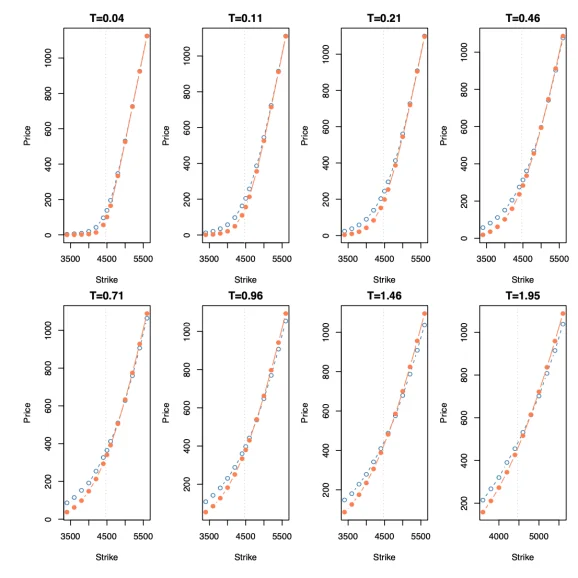
The effectiveness of the proposed method has been validated through comparisons with the implied volatility surface of DAX index European options, specifically those quoted on July 5, 2002. This wasn’t just a random selection of data; validation is essential in any theoretical framework. The validation process compares actual prices rather than implied volatilities. Because the methodology does not depend on market inputs, it extends naturally to accommodate path-dependent payoffs, exemplified through its application to arithmetic Asian options. What's compelling here is how validating against realistic conditions increases confidence in this new method. As many traders know, implied volatility can skew actual market behavior, particularly during periods of uncertainty and drastic shifts. The ability to step away from this reliance and still yield results that match or exceed traditional models is noteworthy.
Significance and Future Implications
What this means for you, if you're working in this space, is clear: we might be staring down a shift in how options pricing is approached. The traditional models, while useful, won’t always fit every scenario, especially as new financial products and maelstroms of market activity emerge. This development has potential long-lasting repercussions. Stakeholders from hedge funds to retail traders could benefit from better alignment of option pricing with fundamental asset behaviors rather than abstract models. Also noteworthy is that the researchers are eager for feedback—a sign of the collaborative spirit that defines the academic world but one that might also serve to enhance the validity and adoption of this methodology in real-world practice. Constructive criticism can ultimately refine the approach and adjust it for broader use. It's an invitation to engage actively, rather than a final product set in stone.
A further objective of this research is to foster constructive feedback and insights to enhance the robustness of the proposed methodology. Engaging with practitioners will only strengthen its theoretical roots, potentially ushering in a new era of option pricing where flexibility and empirical relevance rule.
Read the full research paper here.