The Next Step for Robots: Galbot's Push into Flexible Industrial Automation
Industrial robots have transitioned from mere tools for repetitive tasks to complex systems that demand adaptability and intelligence. Traditionally, these machines have excelled on highly standardized production lines like automotive manufacturing. Yet, as the industry evolves, the need for robots that can operate within dynamic and less predictable environments has become clear.
Enter Galbot, a Chinese robotics startup founded in May 2023, which has garnered significant attention as it explores applications of embodied AI in manufacturing. The company’s core mission is to bridge the gap between laboratory research and real-world production by merging robotic hardware, intelligent models, and sophisticated data systems.
Galbot has quickly attracted investor interest, raising over RMB 2.4 billion (around $360 million) by 2025, demonstrating a significant commitment to this burgeoning sector. Notably, a financing round in June 2025 alone secured RMB 1.1 billion ($160 million). The company maintains a strong valuation, reportedly exceeding RMB 22 billion (approximately $3.27 billion) after a RMB 2.5 billion ($370 million) round in 2026, which included backing from prominent investors like the National Artificial Intelligence Industry Investment Fund and Sinopec.
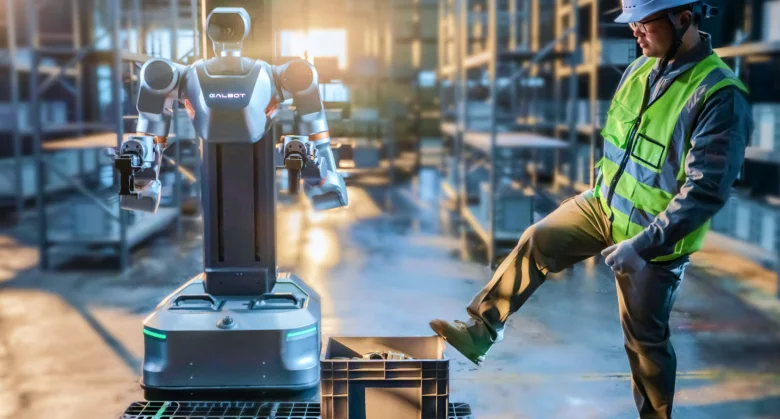
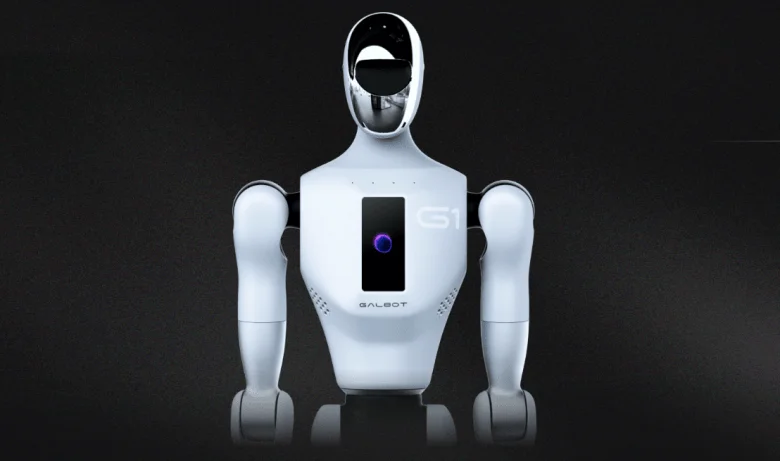
One of Galbot's standout models is the Galbot G1. This robot deviates from the realm of stationary arms by integrating mobile platforms with dual-arm manipulation. It can navigate varied work environments to perform tasks such as picking, transporting, and organizing materials. While traditional robotic systems are fixed at specific stations with rigid workflows, mobile manipulation robots like the G1 can adapt their actions and locations according to the task at hand, making them ideal candidates for modern flexible manufacturing.
The implications for manufacturers are expansive. Many production processes still heavily rely on human labor for tasks like sorting and unloading, which, while repetitive, require a degree of adaptability that typical automation fails to address. This gap underscores the potential for embodied AI robots in diverse operational scenarios.
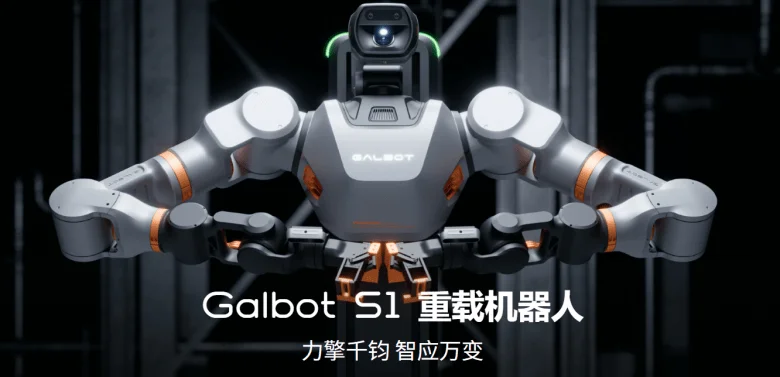
In addition to the G1, Galbot has launched the Galbot S1, designed explicitly for industrial use. Unlike general-purpose robots, the S1 concentrates on manufacturing modalities such as machine loading, transportation, and palletizing. It addresses the labor-intensive operations that are often costly and repetitive, providing a solution to rising labor expenses.
The industrial sector appears to be a promising avenue for commercializing embodied AI. Manufacturing environments present a dual opportunity: there's a palpable demand for automated solutions aimed at improving operational efficiency, and the structured nature of factories allows for more stable long-term robot operation and data collection compared to unpredictable home settings.
However, integrating robots into factories isn’t simply a matter of replacing human labor. It represents a fundamental shift in production methodologies. Going forward, robots are likely to handle more strenuous, repetitive, and hazardous tasks, effectively working beside human staff to enhance productivity and improve safety.
A pivotal element in the adoption of industrial robots is the advancement of AI technology. Traditional robots typically require manual programming for each movement, whereas embodied AI systems necessitate robust capabilities in understanding, planning, and learning. Galbot's AstraBrain intelligence system is designed to integrate visual perception, task planning, and motion control, thereby enabling robots to interpret instructions and adapt to their environments more effectively.
This shift in capabilities represents a departure from simple execution towards robots that can gradually manage more intricate tasks autonomously. Nonetheless, the industrialization of these AI-driven robots is still nascent. There are hurdles to address, including costs, reliability, and the stability necessary for large-scale deployment. For robotics companies, proving continuous functionality in genuine production settings and showing tangible economic benefits remains the true test.
As AI technology intertwines with robotics, industrial environments could become pivotal in realizing the potential of embodied AI. For Galbot, the goal goes beyond mobility; the challenge lies in demonstrating that their robots can add genuine value within various industry operations. In the coming years, successful deployments that tackle real production issues may well dictate the landscape of industrial automation.