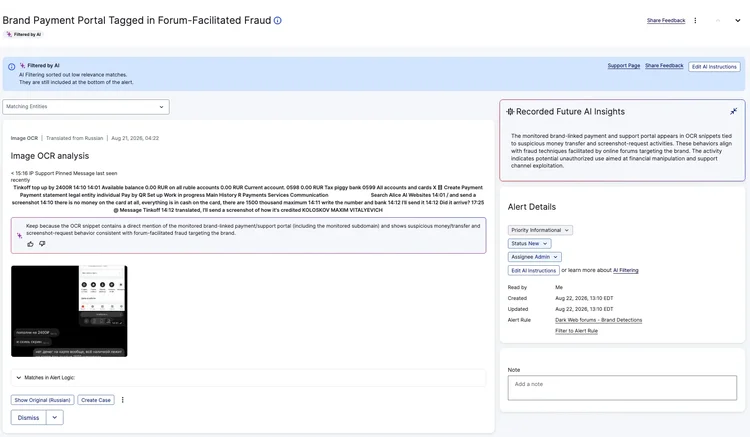
Streamlining Alert Analysis with Recorded Future's AI Alert Filtering
Recorded Future has unveiled its latest feature, AI Alert Filtering, designed to optimize the handling of security alerts. Activated today, this AI-based agent autonomously ranks alerts based on relevance before analysts even access them.
Understanding the Challenge of Security Alerts
The surge in cyber threats links directly to a staggering increase in alerts that organizations must analyze. With cybercriminals continuously evolving their tactics, the volume of security alerts can be overwhelming. Many organizations face alert fatigue, where analysts become inundated with notifications, making it difficult to discern which threats require immediate attention. This is where AI Alert Filtering steps in. By utilizing AI, Recorded Future is addressing one of the most pressing issues in cybersecurity today—too much noise and not enough actionable insight.
Threat actors have begun employing AI to exploit vulnerabilities, craft phishing attacks, and extract credentials more rapidly than ever. It's a constant arms race, where cyber defenses must adapt to keep pace with malicious innovations. In this intensified environment, solutions that streamline threat assessments become invaluable. AI Alert Filtering not only helps in triaging alerts but also enhances the analyst's ability to focus on significant threats. If you’re working in this space, you’ll appreciate the implications of prioritizing alerts effectively, as it can lead to swifter responses and, potentially, mitigated damages.
Efficiency Matters: The Role of AI in Alert Management
With the implementation of AI Alert Filtering, Recorded Future aims to enhance efficiency in intelligence workflows. With the system utilizing Recorded Future AI, it begins the critical process of prioritization, performing an initial evaluation of alerts. This feature capitalizes on the Intelligence Graph®, which offers rich contextual data from Recorded Future’s extensive threat intelligence network. It’s not just about sorting through text; the AI is capable of understanding the complexities surrounding various alerts. Each evaluation is thus informed by a wider perspective, which is essential when alerts can stem from varied threats or sources.
Key Features of AI Alert Filtering
- Relevance Sorting: Alerts are categorized as High or Low Relevance based on the intent behind the rules. Analysts first encounter the High Relevance section, while Low Relevance items remain accessible but aren't immediately prioritized. This feature ensures that analysts are not overwhelmed right off the bat with less critical information.
- Summary Insights: Every alert includes a concise summary, enabling analysts to swiftly assess whether it necessitates prompt attention. This reduces the time spent analyzing irrelevant details—an essential feature for managing high-volume alerts.
- Customizable Intent: Users can tailor priorities for the AI beyond the default settings, allowing for greater specificity, such as differentiating alerts for various departments. This customization reflects the unique needs of different teams within an organization, making the tool more flexible and usable.
- Automatic Dismissal Option: Alerts without relevant references can be auto-dismissed, reducing clutter while retaining essential details for later review. It’s crucial that teams maintain a clear workflow, and this feature aids in keeping distractions to a minimum.
- No Loss of Data: The AI filtering alters visibility, not the underlying data. Complete, unfiltered alert details remain accessible in the Portal. This is the part most people overlook — there’s transparency in the process; analysts aren’t losing information, just the distraction of irrelevant alerts.
Early Adoption and Noteworthy Outcomes
Initial feedback from early users of AI Alert Filtering indicates meaningful benefits, with reports of average alert volume reduction of about 63%. However, it’s essential to recognize that outcomes vary depending on specific configurations and use cases. This variation points to the necessity for organizations to understand their unique environments and how best to configure such tools. A 63% reduction sounds impressive but doesn’t guarantee that every user will experience a similar level of success.
How organizations adapt to these tools could well predict their success in navigating modern threats. Each organization has its peculiarities, and a one-size-fits-all approach to configuration may not yield optimal results. Users must remain proactive and continue refining their alert filtering parameters to match the evolving threat landscape they face.
Future Outlook: AI’s Role in Cybersecurity
The continued increase in cyber threats indicates that organizations can expect a growing dependence on AI for essential tasks such as alert filtering. Recorded Future’s introduction of AI Alert Filtering is a reflection of a broader trend within cybersecurity, where technologies are continually being enhanced to cope with more sophisticated threats. Companies that can effectively incorporate AI into their workflows stand to gain a significant advantage over rivals that do not.
And yet, while AI presents powerful capabilities, analysts should remain vigilant about the limitations of such systems. Relying too heavily on AI could lead to complacency, where human intuition and expertise are overlooked in favor of automated processes. The human element in cybersecurity should not be underestimated—after all, machines can miss the nuanced patterns that skilled analysts can detect.
The significance of facilitating a collaborative approach between AI systems and human intelligence can’t be overstated. Organizations must find the right balance to maximize efficiency without compromising security integrity. Recorded Future’s advancements in this space might push the envelope, but they are part of a wider conversation about the ethical use and scrutiny of AI in security operations.