Reimagining Cyber Defense: The Role of AI and Threat Intelligence Fusion
Reassessing Cybersecurity Strategies
While artificial intelligence (AI) has often been labeled simply as a tool for enhancing automation and speeding up cybersecurity processes, that perspective misses its more profound impact. The true innovation lies in the integration of AI with threat intelligence, which encompasses insights into both adversaries’ capabilities and internal vulnerabilities. This combination offers a novel approach that could fundamentally alter the longstanding power dynamics between attackers and defenders in the cybersecurity space.
The Enduring Defender’s Challenge
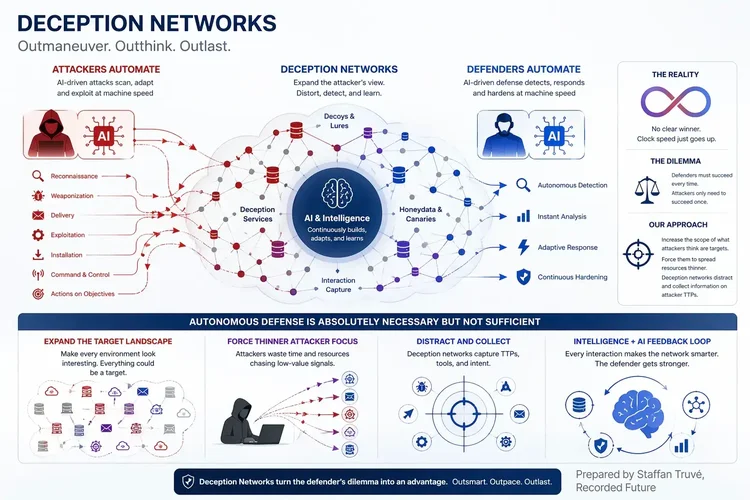
The fundamental disparity in cybersecurity is well-known: defenders must shield every potential attack vector, whereas attackers need only uncover a single vulnerability. Defenders are often hampered by resource limitations—whether budget, compliance regulations, or system uptime mandates—while attackers possess the luxury of patience and selectivity. Historically, threat intelligence has been limited to serving as a reactive feed, supplying data on indicators of compromise and malware signatures—but without integration into defensive mechanisms. This one-dimensional approach hampers a defender's ability to mount effective countermeasures.
Automation vs. Transformation
While a considerable portion of AI's initial influence in cybersecurity has focused on automating existing protocols—like expediting alert responses and streamlining patch management—these enhancements merely amplify pre-existing workflows rather than catalyzing new methods of engagement. Although these improvements mitigate analyst workload and hasten response times, they don’t redefine what’s fundamentally achievable in cybersecurity defense.
AI’s Synthesis with Threat Intelligence
The most profound shift in cybersecurity is not merely applying AI to existing practices or viewing threat intelligence as a passive feed. It’s about the synergistic combination of both: AI algorithms that can simultaneously assess adversarial tactics and organizational weaknesses in real time, on a broad scale. This integration offers capabilities previously unattainable in cybersecurity.
1. Mapping Attacker Tactics to Organizational Weaknesses
Traditionally, threat reports provide descriptions of adversary tactics and techniques, but responding to this intelligence often requires manual effort, forcing analysts to cross-reference external insights against internal systems. Artificial intelligence can automate this mapping, enabling real-time evaluations of risk based on live operational data. This revamps threat intelligence from mere awareness into actionable insights tailored to the specific environmental context of an organization.
2. Integrating Offensive and Defensive Insights
For too long, organizations have kept external threat intelligence and internal vulnerability assessments in separate silos. AI constructs a unified view by continuously merging these perspectives, enabling proactive analysis of where adversaries’ capabilities collide with an organization’s vulnerabilities. The outcome is a real-time synthesis that reveals critical insights and informs defensive strategies beyond static vulnerability lists.
3. Intelligent Prioritization of Threats
Historically, the process of prioritizing the remediation of vulnerabilities has relied heavily on theoretical models such as Common Vulnerability Scoring System (CVSS) scores. However, these do not account for adversary behavior. AI empowers defenders to prioritize threats based on real-world exploitation patterns, increasing focus on vulnerabilities that pose actual risks, ensuring that resources are deployed effectively.
4. Holistic Contextual Reasoning
Traditional systems tend to rely on rigid event correlation that fails to consider the broader context. AI can integrate varying inputs, synthesizing incomplete logs and abnormal behaviors into conclusions akin to those of seasoned analysts. This comprehensive approach sharpens threat detection by embedding contextual understanding that aligns with adversary tactics previously identified.
5. Continuous Model of Attack Surfaces
Rather than restricting assessments of exposure to periodic penetration tests, AI allows for dynamic modeling of an organization’s environment that continuously adapts to changes. Enhancing this model with threat intelligence offers a living evaluation of potential attack paths, keeping defensive stances in alignment with evolving adversary strategies.
6. Predicting Adversary Actions During Incidents
During ongoing cyber incidents, effective responders often leverage knowledge of attacker behaviors to anticipate their next moves. AI can embed these predictive capabilities, recognizing patterns that align with known adversarial techniques. This predictive power aids defenders in proactively countering threats rather than reacting after the fact.
Shifting the Paradigm: AI-Driven Deception
The developments highlighted emphasize a defensive posture that anticipates and mitigates. Yet, the intersection of AI and threat intelligence also introduces proactive strategies to mislead adversaries.
From Inflexible Honeypots to Adaptive Deception
Deceptive technologies like honeypots have historically been limited by their static nature, making them easily identifiable to trained adversaries. AI can enhance these initiatives by creating dynamic and responsive environments that mirror realistic activity, adjusting continuously to confuse attackers and draw them into false engagements.
Strategically Placed Decoys
This enhanced deception ties back to the insights gained through threat intelligence. Understanding adversaries’ tactics and paths enables AI to digitally place decoys at the most compelling junctures, making the allure of traps more enticing while simultaneously gathering intelligence about attackers’ methods and tools.
Cost Imposition and Confidence Erosion
Employing AI-generated deception at scale flips the script on adversaries. Encountering a sophisticated mix of real and fake assets forces attackers to expend valuable time discerning truth from fiction, diminishing their confidence and increasing operational risks associated with discovering triggers that alert defenders.
Active Intelligence Through Engagement
AI's role can even evolve to facilitate active intelligence collection during deceptive engagements. Rather than merely setting traps, AI enables organizations to interact with attackers, extracting valuable insights into their techniques, further informing and refining future defensive tactics. While such an approach comes with its risks, the intelligence garnered holds immense potential for shaping a robust defense strategy.
Empowering Intelligence-Driven Defense
One subtle but significant change stems from AI lowering the complexity barriers associated with implementing intelligence-driven defense strategies. When analysis can be conducted through natural language queries—allowing any team member to ask contextualized questions about vulnerabilities—security practices become accessible beyond specialized analysts.
Strategic Implications
This shift facilitates the continuous merging of offensive intelligence and internal vulnerabilities, addressing a historical weakness for many organizations. AI enhances this capability not only making it feasible but also economically accessible for a wider array of organizations.
Conclusion
The evolving cybersecurity landscape compels a reevaluation of traditional dynamics, shifting focus from attackers versus defenders to AI-enhanced solutions versus traditional methods. As adversaries increasingly leverage AI themselves, organizations that fail to adopt similar measures risk falling further behind, while those integrating AI into their defenses could find themselves parity and even an edge in these ongoing contests.