Unlocking Potential: 412 New CRAN Packages Enhance R's Research Capabilities
Jul 27, 2026
681 views
June's CRAN Package Surge: A Vital Resource for Diverse Research Areas
In June, the Comprehensive R Archive Network (CRAN) witnessed a remarkable upsurge, with 412 new packages added. This influx represents a significant contribution to the R programming community, catering to an array of disciplines from Bioarchaeology to Time Series Analysis. For those entrenched in these fields, this expansion isn't just noise; it opens windows for advanced analysis and more nuanced insights. The diverse categories presented — including Ecology, Epidemiology, and Climate Studies — offer vital tools for researchers aiming to tackle complex problems. If you’re working in these areas, you’ll likely find that many of the new packages address specific needs, whether through improved statistical methods, enhanced simulations, or tailored data visualizations. This is more significant than it looks at first glance, as it reflects R's growing utility in pushing boundaries in multi-faceted research environments. Among the top picks, some stand out due to their innovative approaches. For example, the new Bioarchaeology package, baytaAAR v1.0.3, employs advanced Bayesian techniques to estimate age from skeletal data—providing a new perspective on demographic studies of ancient populations. It integrates a Gompertz prior, factoring in population-level mortality, which could refine our understanding of ancient life and death patterns. Similar advancements are seen in the field of Climate Studies with clim4health v0.1.0. This tool not only processes climate data but also connects these datasets with epidemiological research—an increasingly critical intersection as climate change worsens health outcomes globally. This ongoing development in R packages is an exciting signal for researchers. Each package doesn’t just bring new capabilities; it enhances interoperability across various fields. For those in finance, CamelRatiosIndex v1.0.0 introduces a method to assess bank performance using a composite index derived from key ratios. This could provide a crucial advantage in an era when financial stability is under scrutiny. In summary, the influx of these new CRAN packages this month not only highlights R's flexibility as a research tool but also its pivotal role in driving forward empirical inquiry across many domains. As such, keeping an eye on these developments is essential for any researcher looking to leverage the full potential of R in their work.Functional Data Analysis
The release of fda.vi v1.0.0 introduces an advanced variational Expectation-Maximization (EM) algorithm tailored for smoothing functional data, making it a notable addition for practitioners in this niche. This tool efficiently manages the intricacies of multiple functional observations through innovative basis function selection. The ability to estimate model parameters simultaneously, while also addressing within-curve correlation, positions it as a highly flexible resource for tackling correlated data challenges. If you're working in this space, the approach offered here combines computational efficiency with practical flexibility. For a deeper dive into the methodology, check out the insights from da Cruz et al. (2024) and the package’s comprehensive vignette.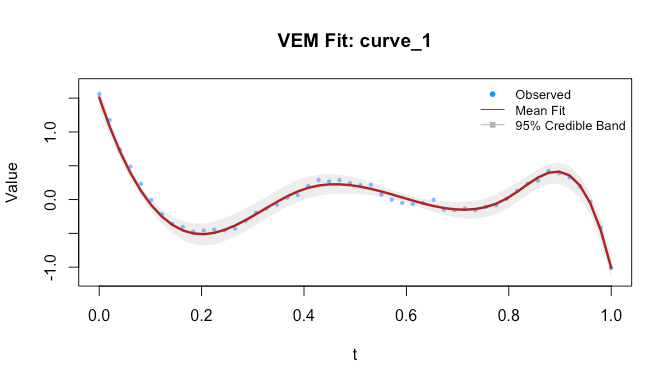
Machine Learning
In machine learning, svmodt v0.1.0 brings an innovative twist to decision trees by integrating Support Vector Machine (SVM) technology. Instead of relying on traditional, axis-parallel splits, this package enables the construction of classification trees using oblique decision boundaries formed by linear SVM hyperplanes. This shift not only allows more nuanced classifications but also enhances performance with various features—like dynamic feature subsets and class weight support—that address challenges in imbalanced datasets. You'll definitely want to explore the practical applications laid out in the vignette.

Looking Ahead: Innovations in Statistical Analysis
The latest advancements in R packages signal a significant shift in the statistical analysis landscape, particularly with tools designed for complex data environments. For instance, the depthR package introduces methods tailored for multivariate analysis by offering efficient implementations of various statistical depth functions. This capability isn't just for academic curiosity; it's vital for data scientists tackling high-dimensional datasets. The inclusion ofC++ backends through Rcpp enhances its performance, an essential feature for researchers dealing with large sample sizes.
Then there's dppca, which takes on a pressing issue in data privacy. It allows for the visualization of differentially private principal component analysis, balancing the need for data utility against privacy concerns. The integrated shiny app demonstrates an effort to make these complex analyses more accessible and interpretable, bringing differential privacy into a practical realm. If you're involved in data analysis in sectors where privacy is paramount, embracing these tools is no longer an option; it's a necessity.