Chinese Automakers BYD, Geely, and Chery Make Their Mark in Global Sales Rankings
This week, the global automotive sales figures for the first half of 2026 highlighted a significant milestone: three Chinese automakers – BYD, Geely, and Chery – have successfully entered the top 10 list based on sales for the first time.
The Rise of Chinese Automakers
The rankings underscore the strength of China's automotive industry as it increasingly reshapes the global auto market. Together, BYD, Geely, and Chery captured 13.5% of worldwide vehicle sales during this period. This isn't just a win for the companies themselves, but a clear reflection of China's growing influence in the automotive sector.
Over the past few years, investments and innovations in this industry have allowed Chinese manufacturers to catch up and, in some cases, surpass their global counterparts. That said, this momentum isn’t just about numbers; it's also a strategic pivot in global automotive dynamics. As certain regions see slower growth, particularly in traditional markets like Europe and North America, Chinese automakers are stepping into the void with competitive pricing and electrification expertise.
Market Standings and Competition
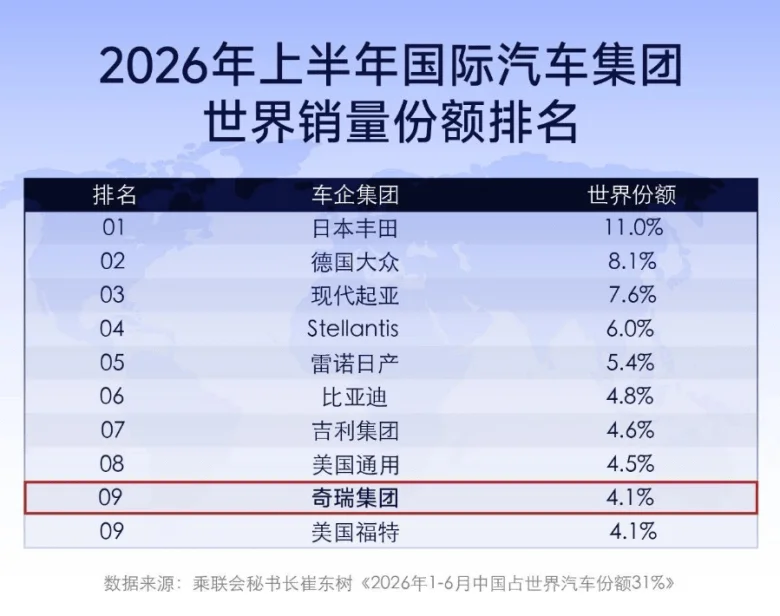
Toyota maintains its position as the world's leading automaker with an 11% market share, followed by Volkswagen at 8.1%, Hyundai Motor Group at 7.6%, Stellantis at 6.0%, and the Renault-Nissan Alliance at 5.4%. BYD has climbed to sixth place, holding a 4.8% market share, closely followed by Geely at 4.6%. General Motors stands at eighth with a 4.5% share, while Chery has tied with Ford in ninth place, both at 4.1%.
This competitive breakdown reveals a shifting paradigm where traditional powerhouses must adapt or face diminished market relevance. The emerging dominance of BYD, Geely, and Chery forces established brands to re-evaluate their strategies. What worked in the past may not resonate as strongly in a landscape where electrification and digital features are paramount. The entry of these Chinese brands into the top tier signals a shift that many in the industry are trying to comprehend fully.
Export Dynamics and New Energy Vehicles
Notably, a substantial portion of this growth can be traced back to exports. China exported 5.096 million vehicles in the first half of 2026, marking a remarkable 65.3% increase year-over-year. June was particularly noteworthy, as the month saw exports exceeding one million vehicles for the first time. The rapid rise in exports not only reflects domestic demand health but also signals an aggressive push to establish a footprint in international markets.
New energy vehicles (NEVs) led this export surge, with numbers soaring to 2.355 million units—more than doubling from the previous year. The global demand for electric vehicles is forcing automakers everywhere to rethink their approaches, and China is uniquely positioned to handle this transition. Not only does the country have a vast manufacturing base, but it also possesses a well-developed supply chain for EV components.
Chinese automakers are also increasing their foothold in international markets, particularly in Europe and emerging markets like South Africa. There's a duality here: while they boost exports, they also begin to localize their offerings. This trend is not merely a business tactic; rather, it’s a response to the complex regulatory landscapes in those regions—making local partnerships increasingly important.
Challenges for Established Brands
While Chinese brands are on the rise, established players like Toyota, Volkswagen, and Hyundai continue to lead the pack. Some American and European manufacturers are experiencing slower expansion as they adapt to electrification and rising supply chain costs. This isn’t just a temporary hiccup; it’s a long-term challenge facing many auto companies that might have once been seen as untouchable.
In contrast, Chinese firms are capitalizing on their expertise in electric vehicles and enhancing their global presence. They’re not just reacting; they're strategically planning around where the market is headed. This alignment with global trends makes them formidable opponents. And yet, you can't overlook the fact that many established brands have decades of brand loyalty and deep customer relationships that play in their favor. But will that be enough?
China’s advanced EV supply chain, along with ongoing developments in battery technology, electric drivetrains, and smart vehicle features, significantly fuels this momentum. Yet, these advancements are accompanied by their own set of challenges. Chinese automakers need to transcend mere innovation if they hope to build trust and longevity in foreign markets.
Future Outlook and Strategic Investments
Moreover, Chinese automakers are extending their strategy beyond simple exports; they are making substantial investments in overseas research and development, along with building manufacturing and sales networks. This localization strategy is increasingly vital as they aim for long-term international success. (And this is the part most people overlook.) They aren't just dumping cars into new markets; they're committing to understanding these markets better.
The China Association of Automobile Manufacturers (CAAM) indicates that exports are now a primary growth driver for the industry amid intensifying domestic competition. This shift underscores a broader trend: the focus will likely increasingly turn toward deeper localization, compliance with local regulations, and sustained investments in technology, branding, and after-sales service, all vital for solidifying success in foreign markets.
Implications for the Global Auto Market
If you're working in this space, keep an eye on these developments. The increasing presence of Chinese automakers in top market rankings is more significant than it looks. This trend signifies not just a shift in sales but a broader realignment of the global automotive power structure. Legacy automakers are facing an uphill battle not just against rising sales from competitors but also against changing consumer expectations and regulatory environments.
The implications are vast: as markets abroad see more Chinese offerings, local manufacturers will need to innovate or risk being overshadowed. With Chinese companies leveraging local production and consumer insights, they could effectively tailor their products to fit distinct market needs. This adaptability could make them even harder to compete against over time.