Navigating the Shadows: Unmasking Maritime Sanctions Evasion Networks
Contextual Overview
The maritime sector faces a complex threat from Iranian and Russian shadow fleets operating within tailored networks designed to bypass sanctions. Central to this evasion is a sophisticated online infrastructure, which includes a myriad of fraudulent websites impersonating legitimate maritime entities, such as ship registries and training organizations. Such digital facades construct a misleading appearance of compliance while permitting illicit activities. This digital misrepresentation not only jeopardizes the integrity of maritime operations but also complicates efforts from regulatory bodies across the globe.
These shadow fleets represent a critical intersection of geopolitical maneuvering and technological exploitation. The implications of these actions extend far beyond the financial losses imposed by sanctions—they pose a fundamental question about the efficacy of regulatory frameworks designed to maintain lawfulness in international waters. As enforcement agencies work under the constraints of international law, the rogue fleets exploit digital gray areas, further emphasizing the urgent need for enhanced oversight and international cooperation.
Unveiling the Evasion Mechanism
The identified online networks exemplify a service-provider model, diverging from traditional centralized operations. Instead, they present a decentralized ecosystem where various actors create and sell reusable digital resources, documentation, and identities. This multifaceted approach complicates detection efforts for authorities striving to enforce compliance regulations. Each actor within this network might perform a different function, from creating fraudulent registrations to producing fake maritime training certificates, effectively disassembling responsibility and accountability among various parties.
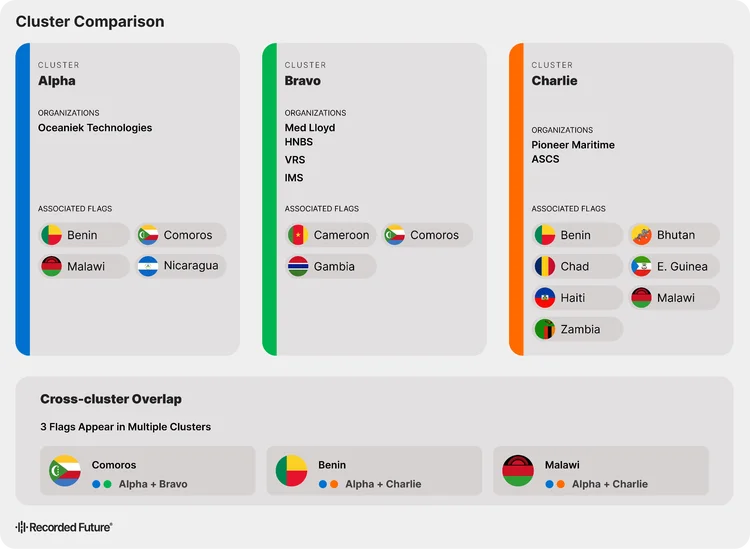
Three distinct clusters—labeled Alpha, Bravo, and Charlie—highlight overlapping technical features, suggesting that these interconnected infrastructures serve multiple sanctions evasion networks (SENs). While these clusters initially appeared disparate, further analysis indicates that their design and functionality are closely linked. Investigations by independent outlets such as Bellingcat and Lloyd’s List support this notion, establishing a clearer picture of how these clusters weave into the broader narrative of maritime sanctions evasion and the sophisticated strategies employed to evade detection.
Key Findings and Analysis
- Research indicates that over 36 inauthentic websites are part of the operations connected to Iranian and Russian maritime entities, revealing explicit ties to seventeen vessels already under sanctions imposed by the U.S. Treasury and other nations.
- These fraudulent sites routinely impersonate maritime administrations and ship registries from countries with weaker oversight, including Comoros, Benin, and Bhutan, among others. This highlights a disturbing trend where lesser-regulated jurisdictions become hotbeds for illicit activity, thus undermining the credibility of international maritime norms.
- Particular emphasis was placed on a website mimicking the Benin Maritime Administration, which allows users to generate fictitious seafarer documents. This documentation can effectively mask the identities of individuals involved in illicit operations, creating a layer of false legitimacy.
- Notable attribution findings link at least two clusters back to an Indian web development company, Oceaniek Technologies, and interactions with two Syrian nationals involved historically in questionable activities. This cross-border nexus reveals the extent to which these networks can exploit global connectivity for nefarious purposes.
Challenges in Detection and Compliance
Combining traditional sanctions evasion tactics with advanced cyber techniques poses a significant challenge for compliance mechanisms within maritime organizations. The intersection of weak enforcement in specific jurisdictions and the sophisticated cyber strategies employed by SENs increase the risk of regulatory lapses and due diligence failures. Detection is not just about identifying stolen identities or fraudulent documents; it requires a nuanced understanding of how these digital infrastructures operate.
For instance, the blending of seemingly legitimate maritime activities with illicit operations creates a fog of compliance, leading even well-meaning organizations to inadvertently collaborate with rogue entities. To combat these issues, organizations within the shipping industry must integrate advanced cyber threat intelligence and independent verification practices into their compliance processes. This proactive approach will enhance the identification of fraudulent infrastructures and help mitigate risks associated with these shadow fleets. If you're working in this space, adopting these strategies isn't an option—it's a necessity.
The Road Ahead
Governments must take collaborative action to tackle this growing threat. Authorities that often find themselves impersonated by these SENs need to prioritize efforts aimed at disrupting fraudulent online infrastructures. This is critical in cases where these networks claim legitimacy across multiple jurisdictions, complicating compliance and enforcement actions. One possible avenue is increased international collaboration in intelligence-sharing and operational strategies to thwart these deceitful schemes.
The ongoing evolution of these evasion tactics suggests a continual race between sanctions enforcement and the methods developed by evaders. Watches on compliance lag behind the ingenuity of these shadow fleets. Keeping up demands vigilance from both regulatory bodies and maritime organizations alike. This is more significant than it looks: as tactics evolve, the gap widens. The burden of responsibility falls on industry players and regulatory authorities to remain proactive, vigilant, and responsive.
Implications and Future Outlook
The implications of these findings reverberate across the maritime industry, highlighting the need for heightened scrutiny and innovation in compliance approaches. Failure to adapt could lead to a cascade of regulatory failures, which only serves to empower these shadow fleets further. The international maritime community must brace for an escalation in tactics employed by SENs. By sharing insights and developing standardized protocols, the industry may stand a chance against this growing threat.
That said, technology is a double-edged sword. While it facilitates more effective monitoring and compliance solutions, it also arms malicious actors with tools to further their activities. The challenge lies in understanding and balancing these dynamics to fortify maritime security.