Foxconn and Intel Forge Alliance to Advance AI Infrastructure Development
Strategic Alliance in AI Infrastructure
Taiwan’s Foxconn, also known as Hon Hai Precision Industry, has announced a collaboration with Intel to innovate in the field of AI infrastructure. This partnership aims to leverage Intel’s chip technology and Foxconn's manufacturing expertise to meet the increasing global demand for AI computing solutions. AI has rapidly shifted from theoretical applications to mainstream consideration across various industries. With the growing influx of data and the need for real-time processing, companies are scrambling to enhance their technological underpinnings, making collaborations like this one critical.
Foxconn, renowned for its high-volume manufacturing capabilities, particularly in electronics, brings not just scale but also decades of industry experience to the table. Meanwhile, Intel's pedigree in semiconductor engineering makes this collaboration particularly promising. The current state of AI infrastructure is becoming increasingly sophisticated, driving a demand for better hardware that can support more complex algorithms and processes. This partnership means that both firms are betting on a future where AI isn't just an add-on but a core element of operational strategy for businesses worldwide.
Focus Areas for Development
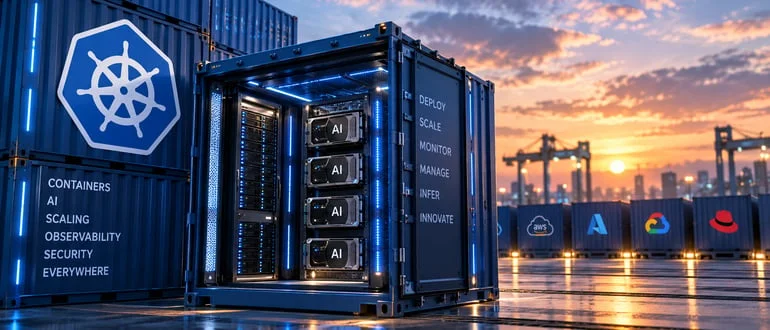
The two companies will concentrate their efforts on developing next-generation AI data center equipment, which includes server racks that utilize Intel’s Xeon processors and AI accelerators. These server racks are not just typical hardware; they are designed to enhance the processing capabilities essential for AI workloads. The pressures on data centers are intensifying as the nature of AI applications often requires handling vast amounts of data at unprecedented speeds, hence the importance of leveraging cutting-edge processing technology.
Moreover, their joint initiatives will explore advancements in high-speed interconnects, thermal management, and optimizations for energy efficiency. In a landscape where energy costs and cooling requirements are key concerns, the ability to create systems that are efficient and effective adds a layer of competitive advantage. High-speed interconnects are vital as they determine how quickly data can be shared between processing units, directly impacting the performance of AI applications.
Thermal management is equally significant. Increased computational power invariably leads to increased heat generation, and thus, systems need to be designed to dissipate that heat effectively to maintain stability and performance over time. Each element in their development focus illustrates a holistic approach to AI infrastructure that not only aims for better performance but also tackles some of the fundamental challenges in AI deployment.
Expanding AI Applications
Beyond traditional data centers, the collaboration seeks to expand AI capabilities into practical applications across industries such as manufacturing, smart city development, and robotics. This strategic move underscores their goal to enhance AI computing infrastructure across diverse commercial settings. For instance, in manufacturing, the use of AI can drastically improve efficiencies in production lines, predictive maintenance, and supply chain management by analyzing data in real-time and optimizing processes accordingly.
Smart city initiatives are another promising area where this collaboration could yield significant results. AI can help in traffic management, energy distribution, and even public safety through advanced surveillance systems. The optimistic vision here is to foster environments where data-driven insights lead to improved quality of life for urban dwellers. This aligns with the global trend toward urbanization and the accompanying challenges that cities face.
And then there's robotics. The interplay between AI and robotics is hardly a new concept, but with enhanced processing capabilities and smarter integrations, the potential for disruption in sectors ranging from healthcare to logistics is enormous. Consider autonomous delivery systems or AI-assisted medical robots in operating rooms — the possibilities are vast, and the groundwork laid by Foxconn and Intel could accelerate this realization.
Industry Context and Competitive Dynamics
In the broader context of the tech industry, this alliance reflects a significant shift toward partnerships that combine hardware manufacturing with advanced processing capabilities. Companies like NVIDIA and AMD have been at the forefront of AI chip development, pushing Intel to rethink its strategies. If Foxconn and Intel can deliver on their promises, they may capture a sizable share of the market that’s frantically seeking reliable, efficient, and powerful AI solutions.
Similar collaborations have emerged in recent years, with many companies recognizing the value of combining strengths to tackle complex technological demands. This isn’t just about competition; it’s about survival in an environment that rewards adaptability. You'll see firms that traditionally operated independently begin to join forces to maximize resources and expertise, reflecting a more interconnected approach to tech development.
Implications for the Future
The implications of this partnership extend beyond immediate product development. By focusing their combined strengths on AI infrastructure, Foxconn and Intel are positioning themselves to lead in a sector that values innovation and adaptability. If they succeed, it could catalyze further advancements, impacting everything from healthcare delivery to autonomous transportation.
This signifies a shift where infrastructure isn’t just an afterthought but rather a foundational element of AI strategy across industries. For businesses looking to implement AI solutions, this means they can expect more efficient, integrated systems that simplify deployment and enhance performance.
What this means for you, whether you’re a business leader or a tech enthusiast, is a potential renaissance in how AI is deployed across various domains. Industry collaborations like this could very well redefine operational efficiency and the scalability of AI applications, leading to exciting new developments we can only begin to imagine.
(and this is the part most people overlook) As partnerships grow, so too does the ecosystem around AI, with startups and established firms finding new niches to fill, further driving competition and innovation. The market is watching closely, and what happens next could shape the future of AI more dramatically than we anticipate.